This January, we’re holding deep grief and deep admiration at the same time. As news of ICE raids in Minneapolis ripples through communities across the country, many of us are feeling the pain, fear, and uncertainty carried by our neighbors— In moments like this, solidarity is not abstract; it is lived, practiced, and built block by block.
What we are witnessing in Minneapolis is also a powerful reminder of what collective care can look like. Neighbors are organizing rapid-response networks, sharing skills, protecting one another, and stepping into roles they didn’t know they could hold—legal observers, caregivers, organizers, translators. This kind of neighborhood-level organizing is a roadmap and a beacon of what we are all capable of when we choose to look out for one another more than ever.
As writer Harsha Waila reminds us:
“The neighborhood as central to political, social, and civic life: It’s not a coincidence that we are seeing some of the strongest and most effective rapid response networks in cities like Minneapolis precisely because the ethic of being a good neighbor—despite political differences—still rings true.”
This ethic is deeply familiar to us in the cooperative and labor movements. Unions and worker-owned cooperatives are built on the same foundation: people organizing where they are, trusting one another, and pooling power to protect dignity and safety. When neighborhoods organize like unions—and unions show up like neighbors—we strengthen the collective muscle needed to weather moments like this and to build the world we deserve.
At Co-op Cincy, we believe this is how change happens: through care, coordination, and community-rooted organizing that refuses to leave anyone behind.
Say Hello to Our New Co-op Business Developer, Meghan!
1. Welcome to Co-op Cincy! What drew you to this role, and what excites you most about supporting worker-owned cooperatives at this moment in your career?
At this point in my career, I’m especially excited to put my skills in service of a network that’s building an alternative economic model, not just better organizations inside the old one. Worker-owned co-ops are proving that we can build businesses that are both humane and high-performing.
2. Your work brings together people, systems, and strategy. How do you see that approach showing up in cooperative workplaces, where shared ownership and democratic decision-making are central?
Shared ownership means thinking critically about how decisions get made, how information flows, how roles are defined, and how accountability works. It forces us to be intentional and think holistically about what the strategy is, who is doing the work, and what the systems they are using to get it done. They define one another and make one another possible.
My approach is to make systems that are typically invisible become seen, tangible and accessible. When systems or processes are clear and well-designed, people know how to participate, how to decide, and how to move work forward together. It brings us all closer to the collective impact of our individual work. And for me, that’s empowering.
3. You’ve helped organizations build things like compensation equity models, job structures, and performance frameworks. What does it look like to do that work in a way that truly supports equity and shared power—not just efficiency?
In practice, to me equity means designing systems that people can influence, and rely on. It means making pay, roles, and expectations clear and anticipatory. In co-ops especially, these systems should feel like collective agreements, not rules handed down from on high. Efficiency comes into play as a method, not a foundation. Not to say that efficiency isn’t important, in fact it’s critical to the sustainability of the company. But establishing a foundation of equity first is how we really start to change the work.
4. You often serve as a bridge between People Ops, finance, and legal or labor realities. What have you learned from navigating complex or high-stakes moments, and how will that experience shape your work with co-ops in our network?
Starting and running a business is high stakes! It impacts the livelihoods of many and so what matters to me is building practices so people understand their rights, their responsibilities, and their power in the organization. With co-ops, I’m especially excited to help teams build bold alternative frameworks of labor while staying compliant.
5. Creating workplaces where people feel safe, supported, and accountable can be a delicate balance. As a leadership coach, how do you help teams care for one another while also building strong, sustainable businesses?
I think psychological safety and accountability actually depend on each other. When expectations are clear and feedback is normal, people feel safer because they’re not guessing where they stand. Feedback becomes anticipatory and people can try new things and make decisions from that place of anticipation.
From a coaching standpoint, this means normalizing hard conversations, making agreements and expectations explicit, and most importantly holding the leaders accountable for their teams outcomes. Safe space does not mean avoiding conflict. It means building teams and spaces that are committed to growing together.
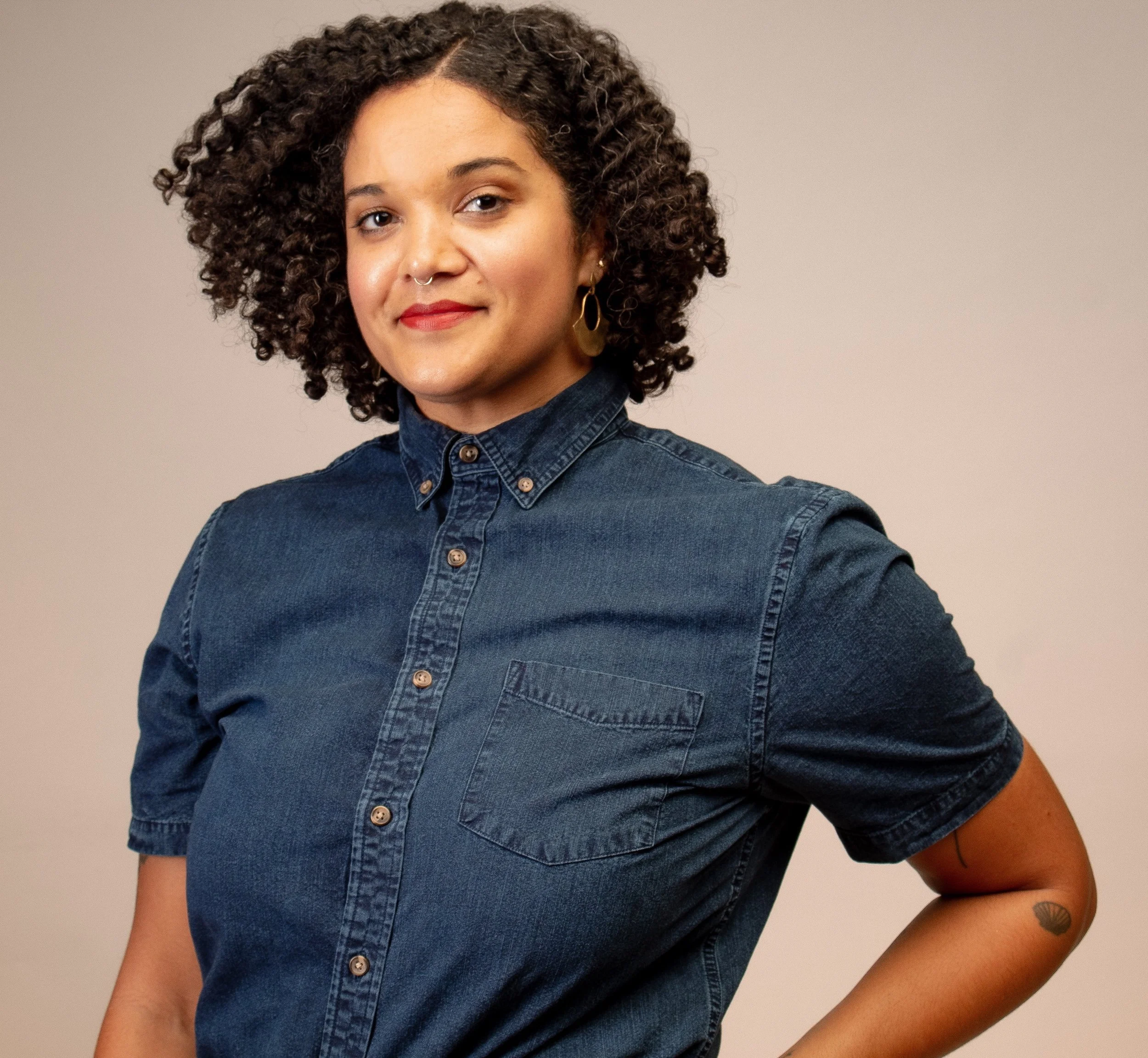
Our newest Co-op Business Developer, Meghan Elizabeth
With Gratitude and Warm Wishes to Victoria Russell
As we say goodbye to our former Office Manager, Victoria Russell, we want to send her off with deep appreciation and love. Victoria brought such a bright spirit, warmth, and joy to Co-op Cincy every day, and her care and presence made our work and workplace stronger. While we’ll miss her dearly, we’re excited for her as she steps into a new chapter—and she will always be a part of the Co-op Cincy family. We wish her nothing but success, fulfillment, and good things ahead. 💛
Amazing Writeup about Our Union Co-op Symposium
In her piece “From Breakdown to Breakthough: Reflections on the 2025 Union Co-op Symposium,” Megan McGee highlights how Co-op Cincy’s biennial gathering brought together worker-owners, union members, and movement builders to explore the theme From Breakdown to Breakthrough, fostering dialogue, workshops, and international perspectives on cooperative and labor collaboration. The article captures the energy and insights from October’s event, emphasizing democratic economic solutions and deepening solidarity across the co-op ecosystem — read more here.
Co-op U Manual Is Available For Free!
The Co-op U Manual is now available as a free e-book—a practical guide to starting and strengthening worker-owned cooperatives. Explore cooperative values, governance, and real-world tools to build shared ownership. Access it here

